
Free tool
Waist to Hip Ratio Calculator
Measure your waist and hips, type both numbers in, and this waist to hip ratio calculator does the maths. You get your ratio and a plain-English read of what it means for health.
Heads up: some links on this page are affiliate links. If you buy something through one, we may get a small cut, and it costs you nothing extra. We only link things we’d suggest anyway. How this works
Save your results and they stay on your device, so you can track changes over months without anyone else seeing them.
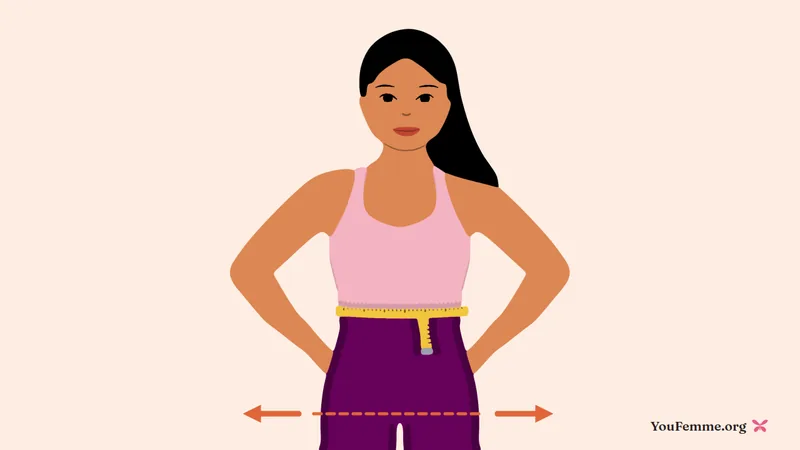
How to Measure Waist to Hip Ratio
Use a soft tape measure that doesn't stretch. This is the method from the World Health Organization's expert report.
How to do it:
1. Stand up straight with your feet close together, arms relaxed at your sides
2. Find the bottom of your lowest rib and the top of your hip bone, at your side
3. Wrap the tape around your waist halfway between those two points, level with the floor
4. Breathe out normally and read the tape at the end of the breath
5. Now wrap the tape around the widest part of your butt, again level with the floor
6. Measure each one twice; if the two readings are within 1 cm, use the average, and if they aren't, measure again

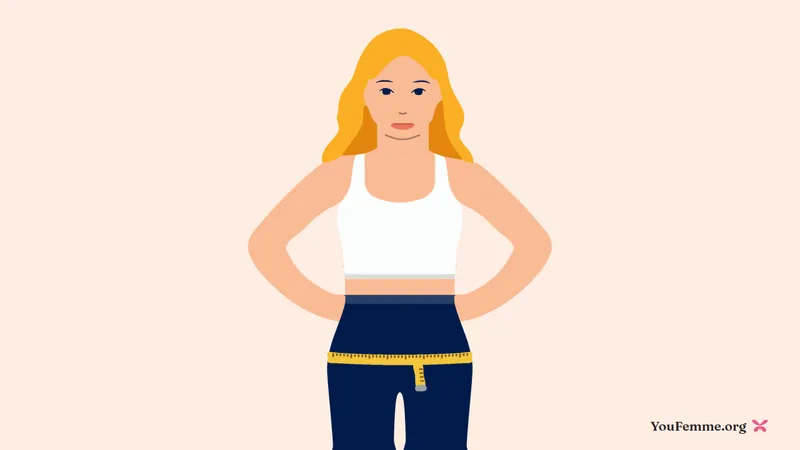
Snug, not squeezing. The tape should sit flat on your skin without digging in.
Waist spot. This is often a little above your belly button, and it might not be the narrowest part of your waist. That's fine. Just use the same spot every time.
Bare skin or thin clothes. Jeans and hoodies add centimetres.
Then divide waist by hips. A 76 cm waist and 100 cm hips gives you 0.76. Same in inches: 30 ÷ 39.5 = 0.76.
What Your Waist to Hip Ratio Means for Health
The ratio shows where you carry fat. More around your middle, compared to your hips, is linked to a higher risk of metabolic problems.
The World Health Organization's cut-offs for "substantially increased" risk are 0.85 and above for women and 0.90 and above for men. They're set separately by sex, and the WHO experts didn't find a reason to stop doing that.
These numbers come from studies of large groups. They're good at spotting risk in a population and much less precise for one person. Your doctor will look at other things too, like blood pressure, blood sugar and family history.
The same WHO report also lists waist size alone: over 80 cm (31.5 in) for women and over 94 cm (37 in) for men means increased risk, and over 88 cm (34.6 in) and 102 cm (40 in) means substantially increased. The report itself points out that those waist numbers started as an example from European populations, so they fit some groups better than others.
Ideal Waist to Hip Ratio for Women (and the Hourglass Ratio)
Health-wise, the only "ideal" the WHO gives is being under 0.85 for women. That's it. There's no health target lower than that.
Online you'll see 0.7 called the perfect hourglass ratio. That idea comes from attractiveness research, which is a very different thing from health research. In a 1993 study, men rated drawings of women with lower waist-to-hip ratios as more attractive.
Later work poked holes in that. A 1999 study found that overall body weight shaped men's ratings more than the ratio did, and said earlier studies had overrated the ratio. A 2009 study of Hadza hunter-gatherers in Tanzania found their men's ratio preferences were significantly different from Western men's.
So the hourglass number is a cultural ideal, and it moves with time and place. Your ratio doesn't need to hit it. Hip dips and straight waists are just bodies too.
Waist to Hip Ratio on HRT
If you're a trans woman on estrogen, your ratio will move, but slowly. In one of the biggest studies, 179 trans women saw their ratio drop by an average of 0.03 in the first year of HRT. Most of that came from hips growing by about 3.2 cm, while the waist barely moved.
For people who started young (puberty blockers, then estrogen at 16), the ratio at age 22 was close to that of cis women the same age. Guidelines say fat redistribution keeps going for 2 to 5 years, so measuring once a month and checking the trend every few months is plenty.
Which cut-off fits you? Honestly, nobody knows yet. No one has worked out waist-to-hip cut-offs for trans people. That's why the calculator lets you pick the women's line, the men's line or both. Your doctor can help you read it alongside your other numbers.
If you'd like a measure that doesn't depend on sex at all, try waist-to-height ratio: add your height in the calculator. NICE in the UK uses the same bands for everyone, and says to keep your waist under half your height.
Check out our curated guide: Does HRT Widen Hips? What Changes and What Doesn't.
If Measuring Feels Hard
Tracking your body can be useful, and it can also get heavy. If measuring makes you anxious, it's completely OK to skip it or stop. If food, weight or how you see your body feels like it's taking over, please talk to someone. In the US, ANAD runs a free eating disorders helpline at 1-888-375-7767 (Monday to Friday, 9am to 9pm Central). In the UK, Beat's helpline for England is 0808 801 0677. Trans Lifeline is run by trans people: (877) 565-8860 in the US and (877) 330-6366 in Canada.
Questions
What is a good waist to hip ratio for a woman?
For health, the World Health Organization uses under 0.85 for women. Below that, this number isn't flagging extra risk. There's no "better" target for looks; that part is personal and cultural.
What is the hourglass ratio?
It usually means a waist-to-hip ratio around 0.7. It comes from attractiveness studies, and later research found body weight and culture matter a lot to those ratings. It has nothing to do with health.
How do I measure waist to hip ratio at home?
Measure your waist halfway between your lowest rib and the top of your hip bone, after a normal breath out. Measure your hips around the widest part of your butt. Keep the tape level, then divide waist by hips.
Is waist to hip ratio better than BMI?
They measure different things. BMI is weight for height, while waist to hip ratio shows where you carry fat. The UK's NICE guideline points out that BMI isn't a direct measure of belly fat, so it suggests adding a waist measurement (it uses waist-to-height ratio).
Can I change my waist to hip ratio?
Somewhat. Ab exercises alone don't shrink belly fat; in one study, 6 weeks of them didn't change it at all. Building the muscles on the sides of your hips adds a little to the hip number. On HRT, fat slowly shifts toward the hips over a few years.
Which cut-off should trans women use?
There isn't a trans-specific one yet. You can compare with the women's line, the men's line or both, and talk it over with your doctor. Waist-to-height ratio is a handy extra because it uses the same bands for everyone.
Does my data get sent anywhere?
No. Saved results stay in your browser on your device. Clearing your browser data deletes them.